
Procedural Form
2026
Exhibited at Hatchwork: An Archaeology of Generative Drawing, Penn State University
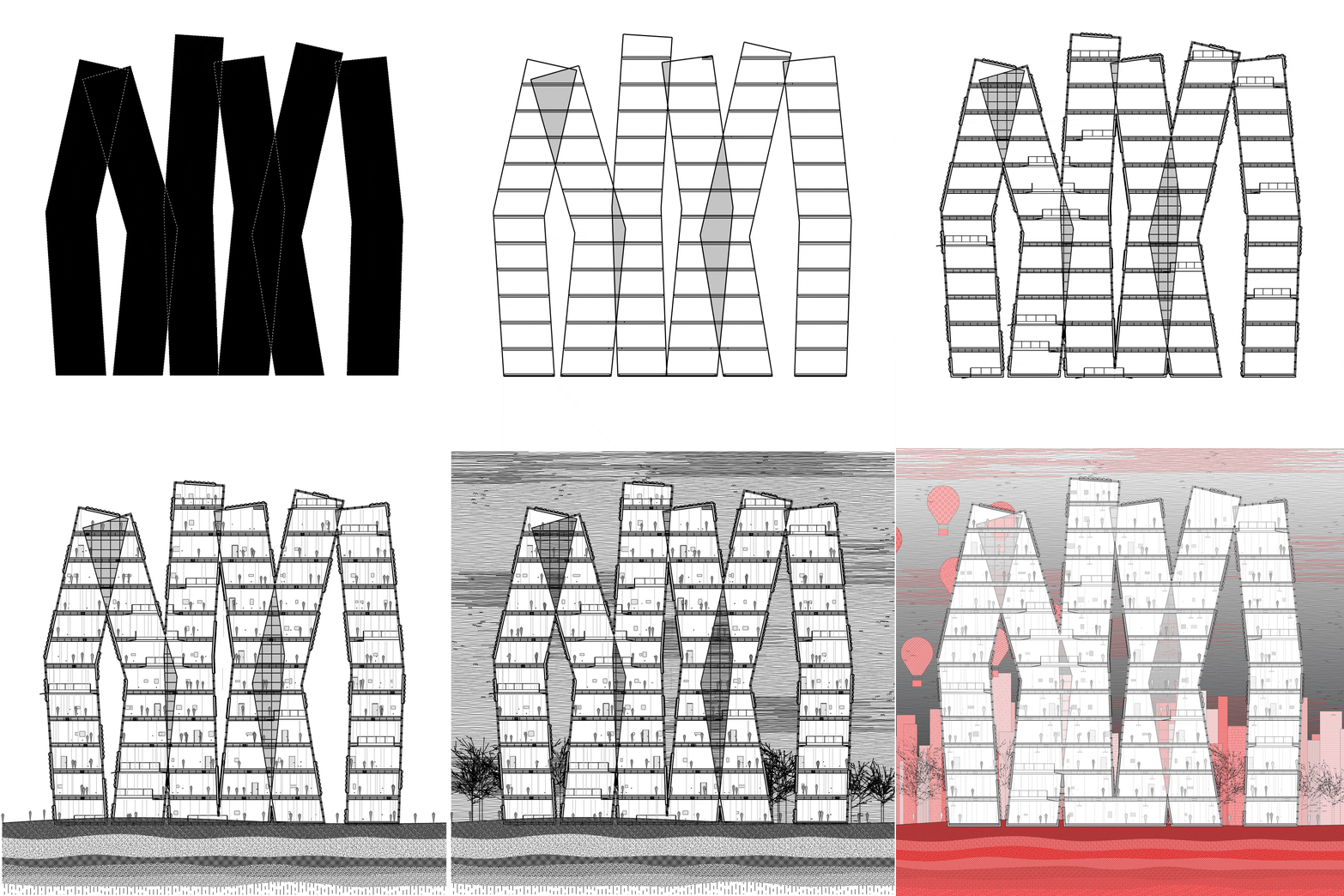
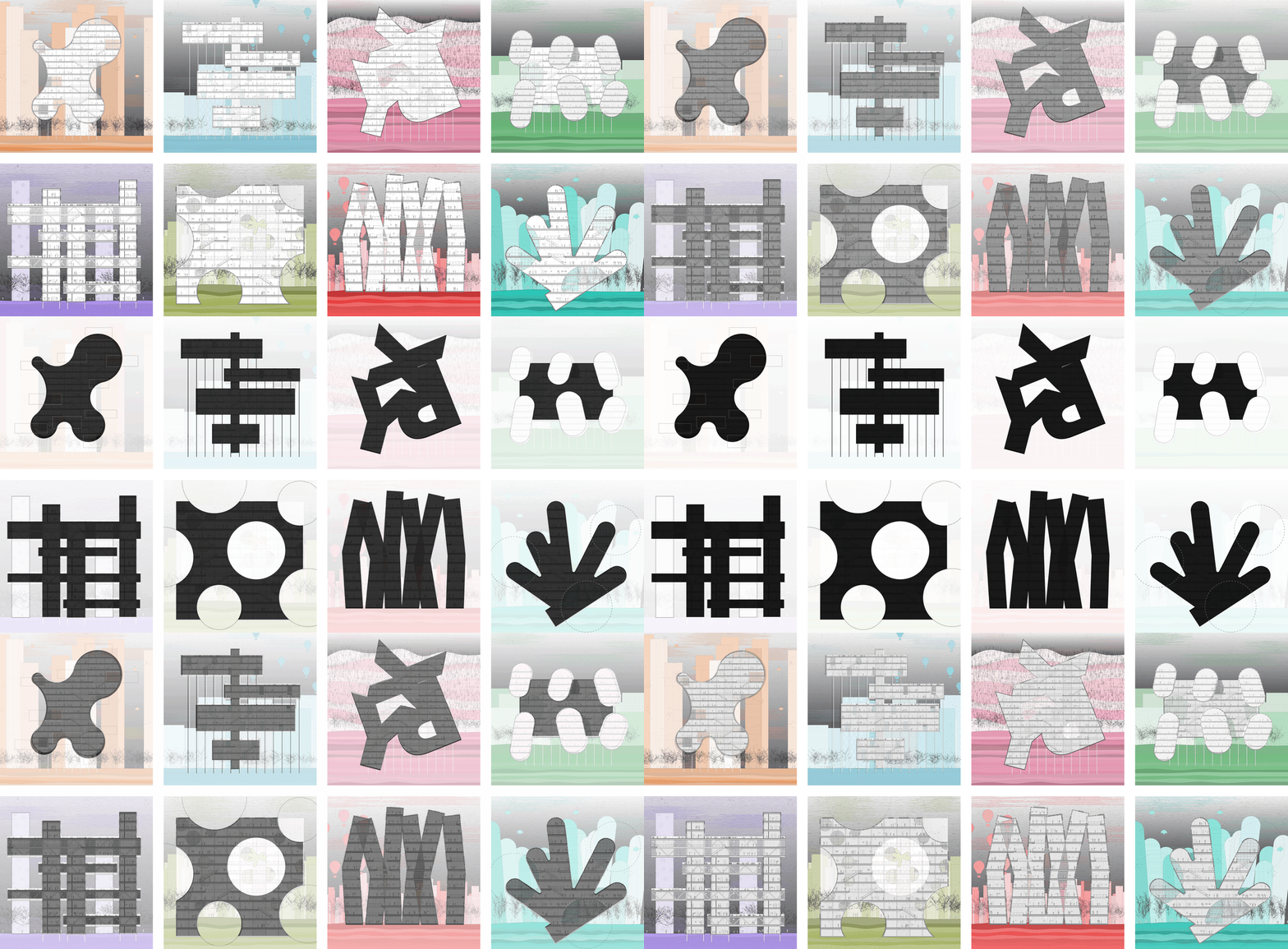
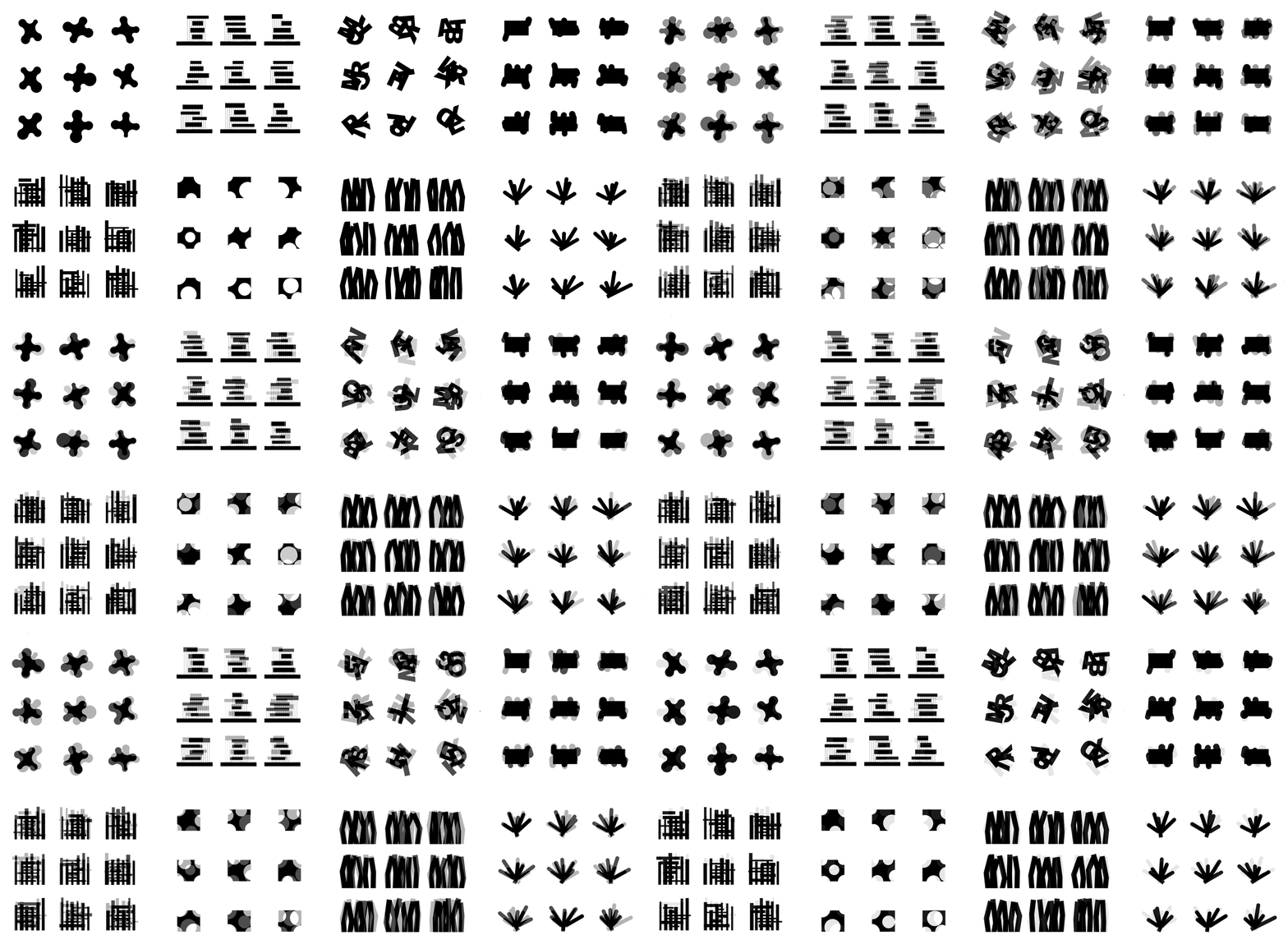
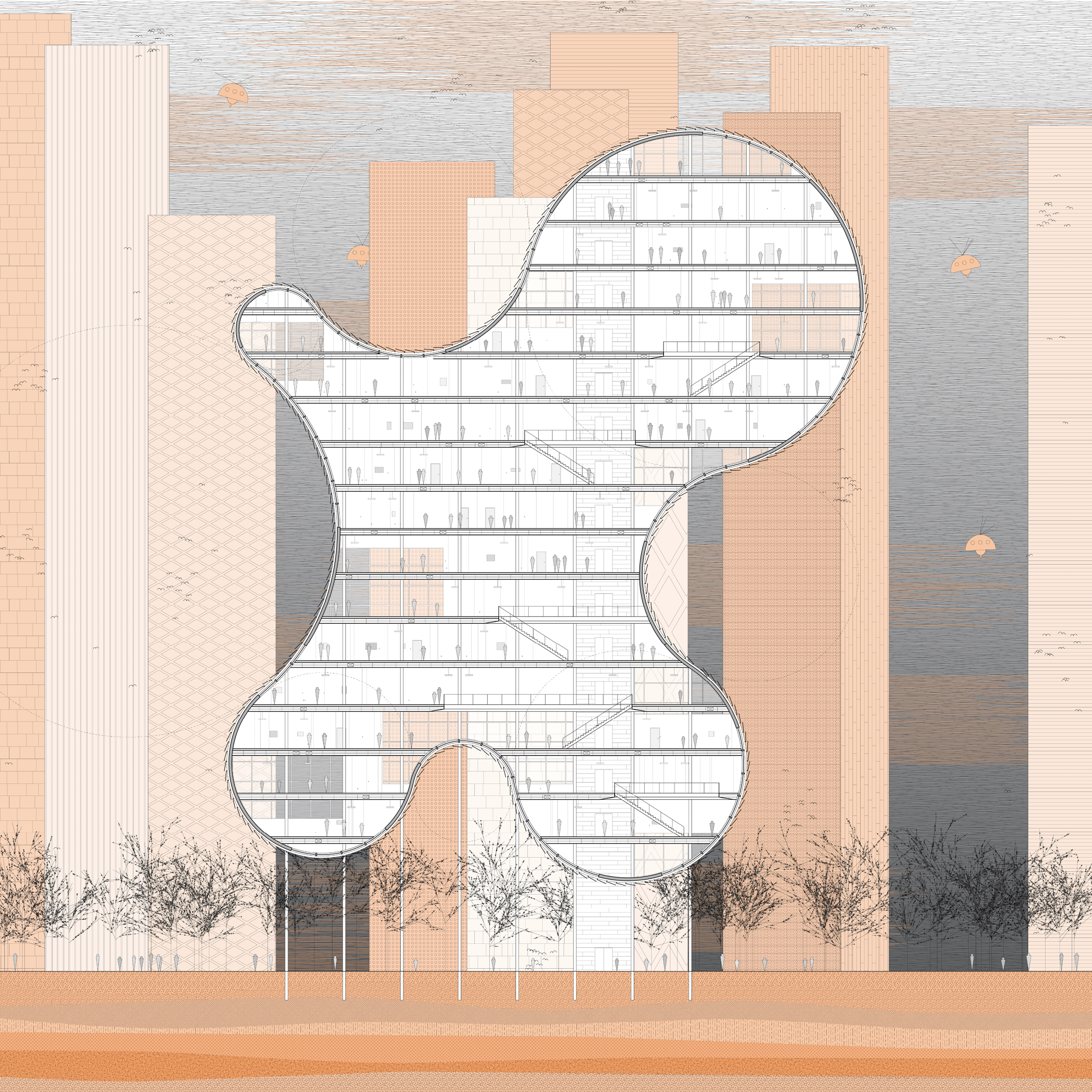
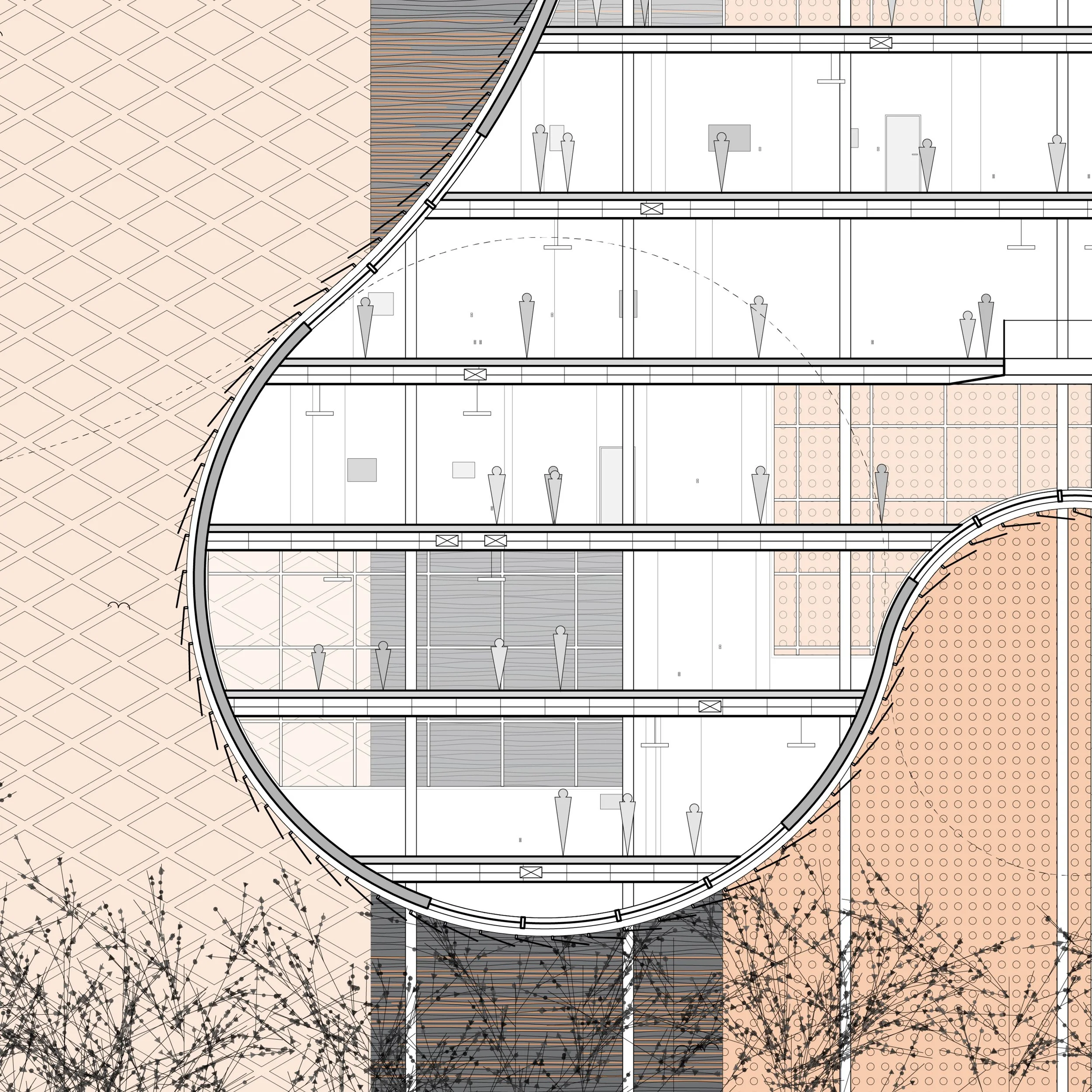
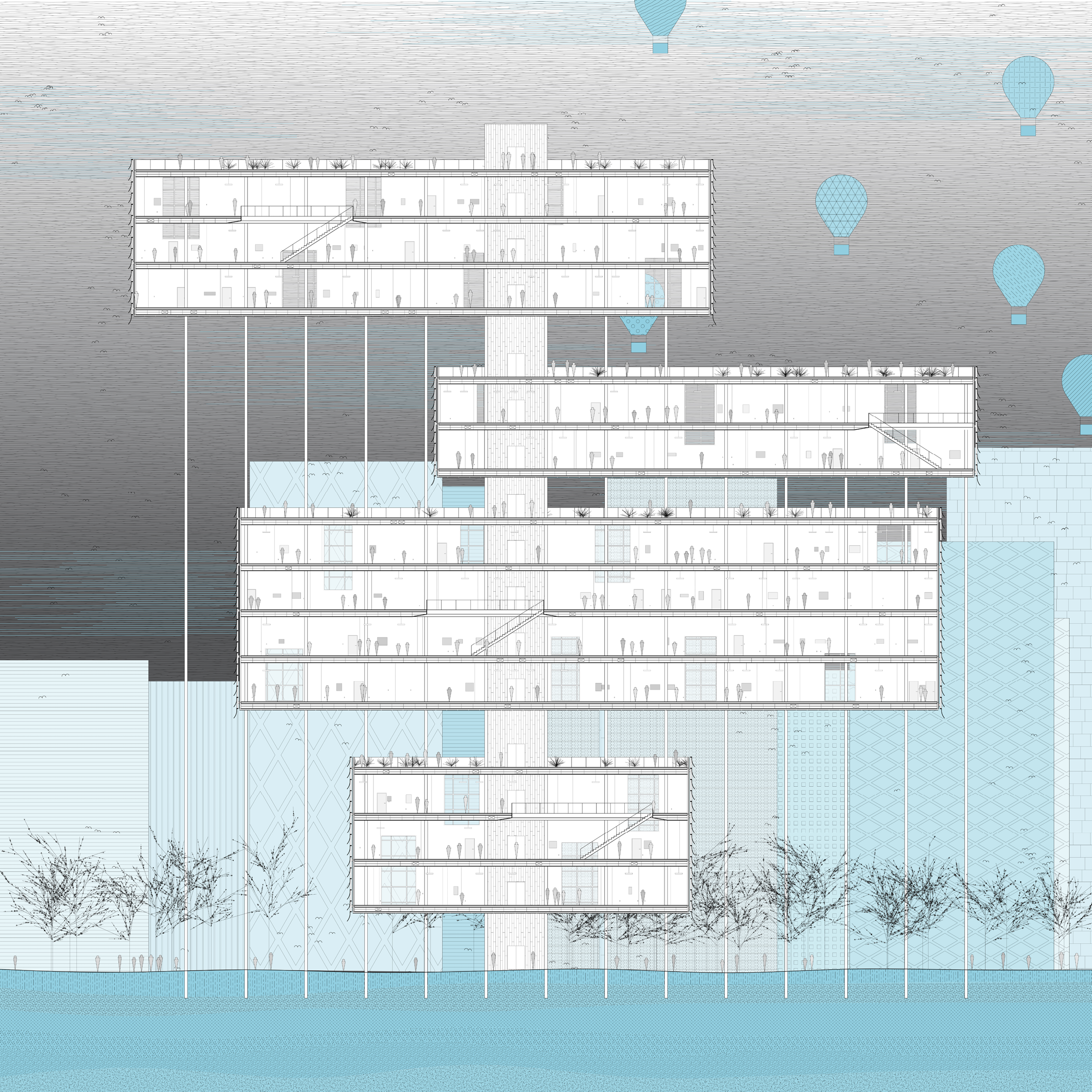
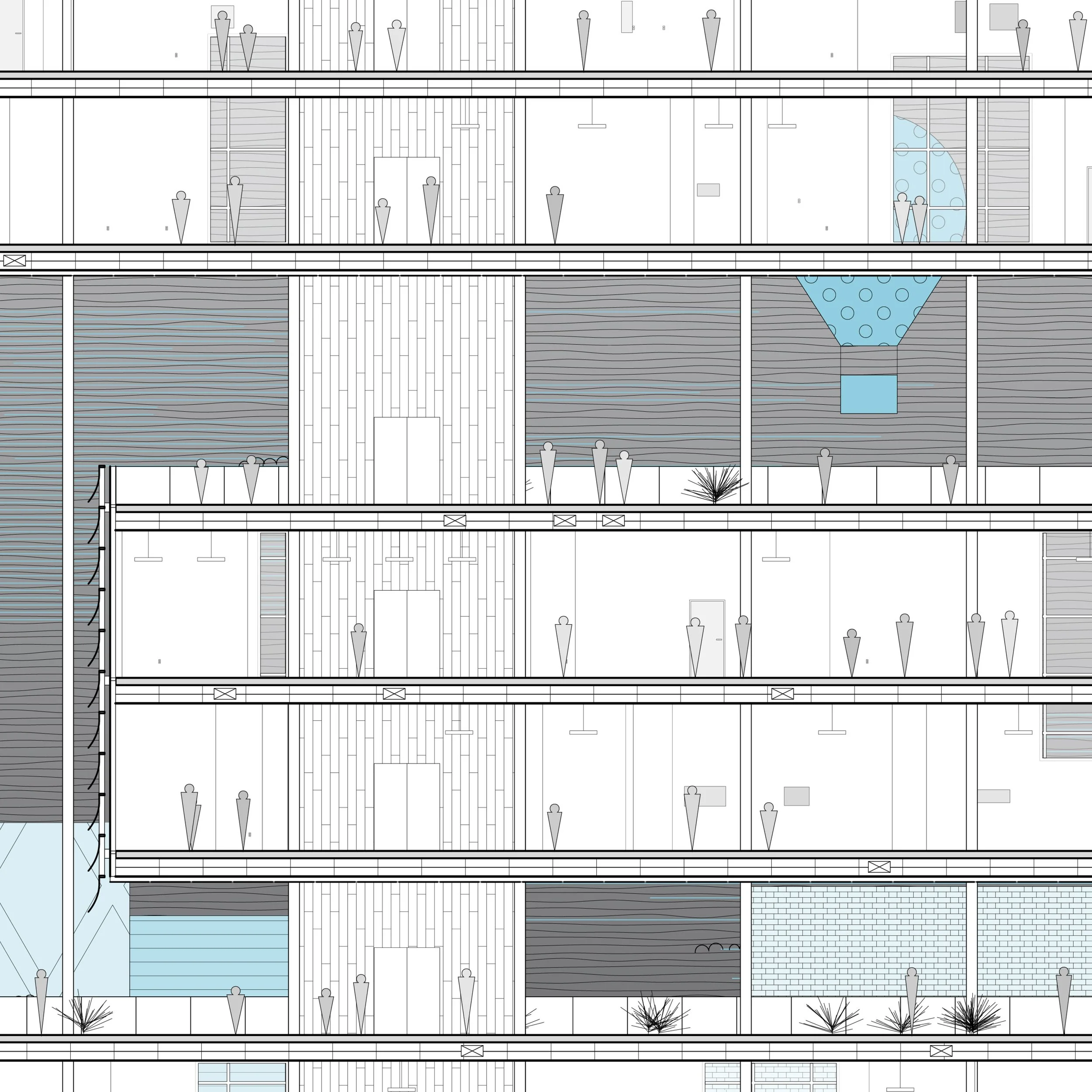
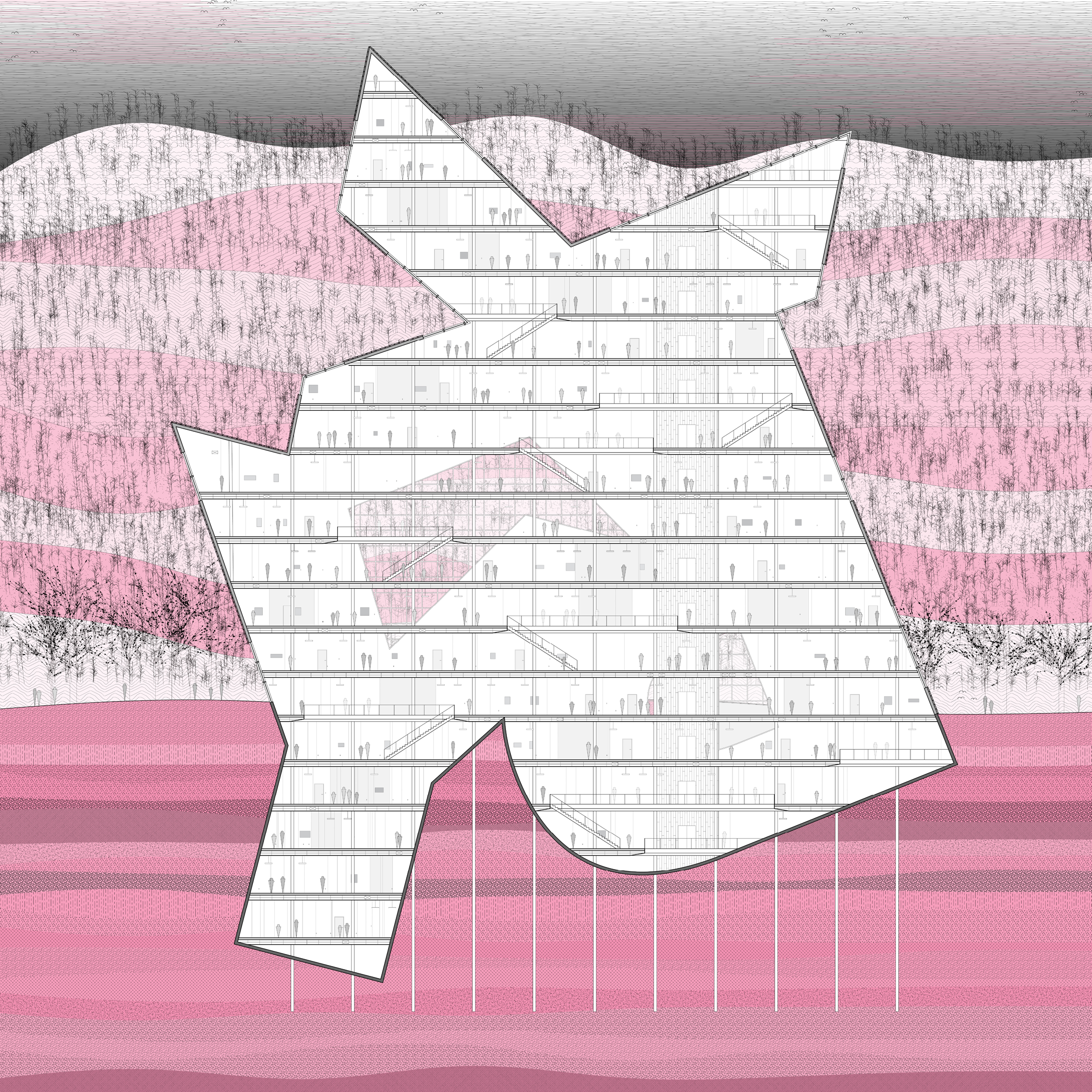
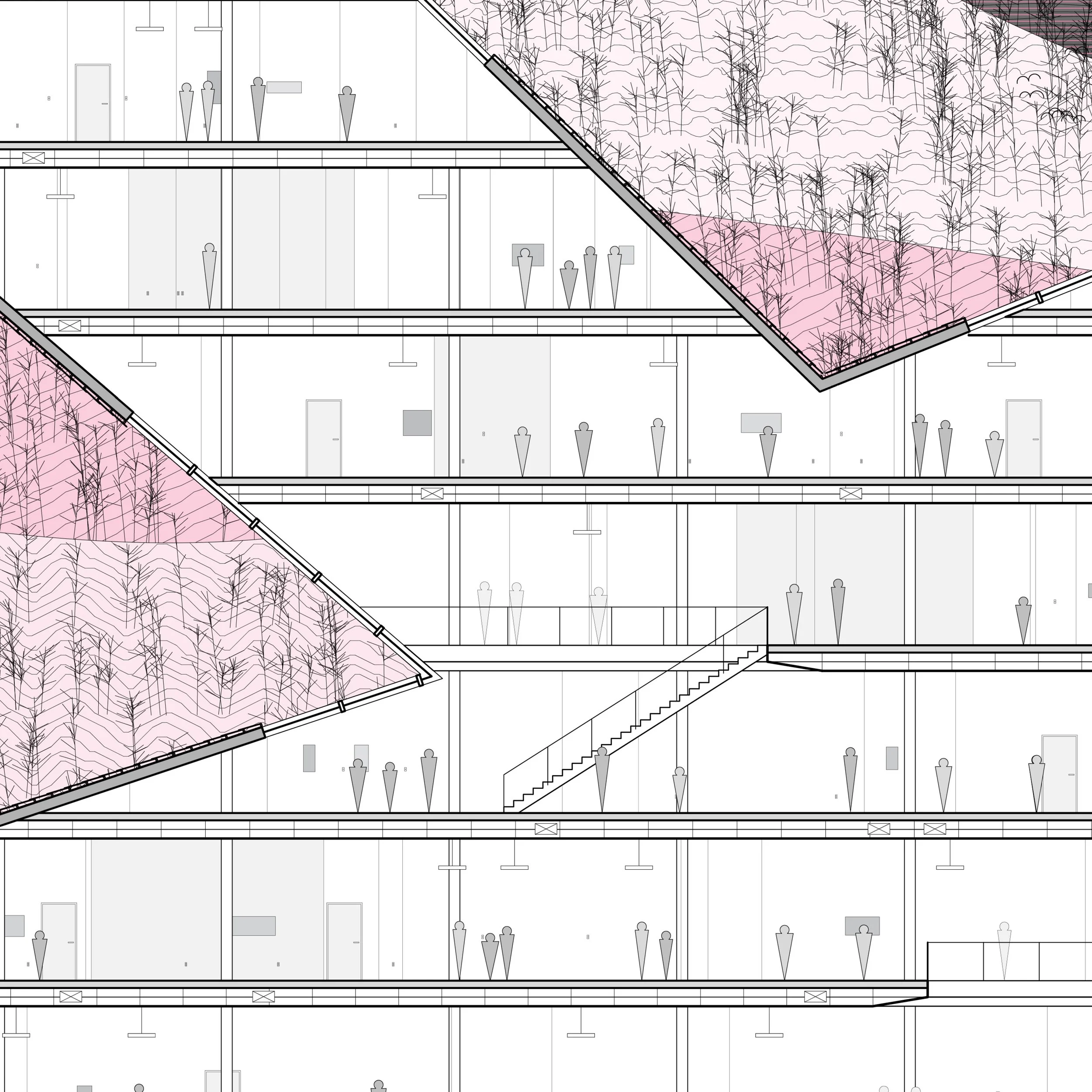
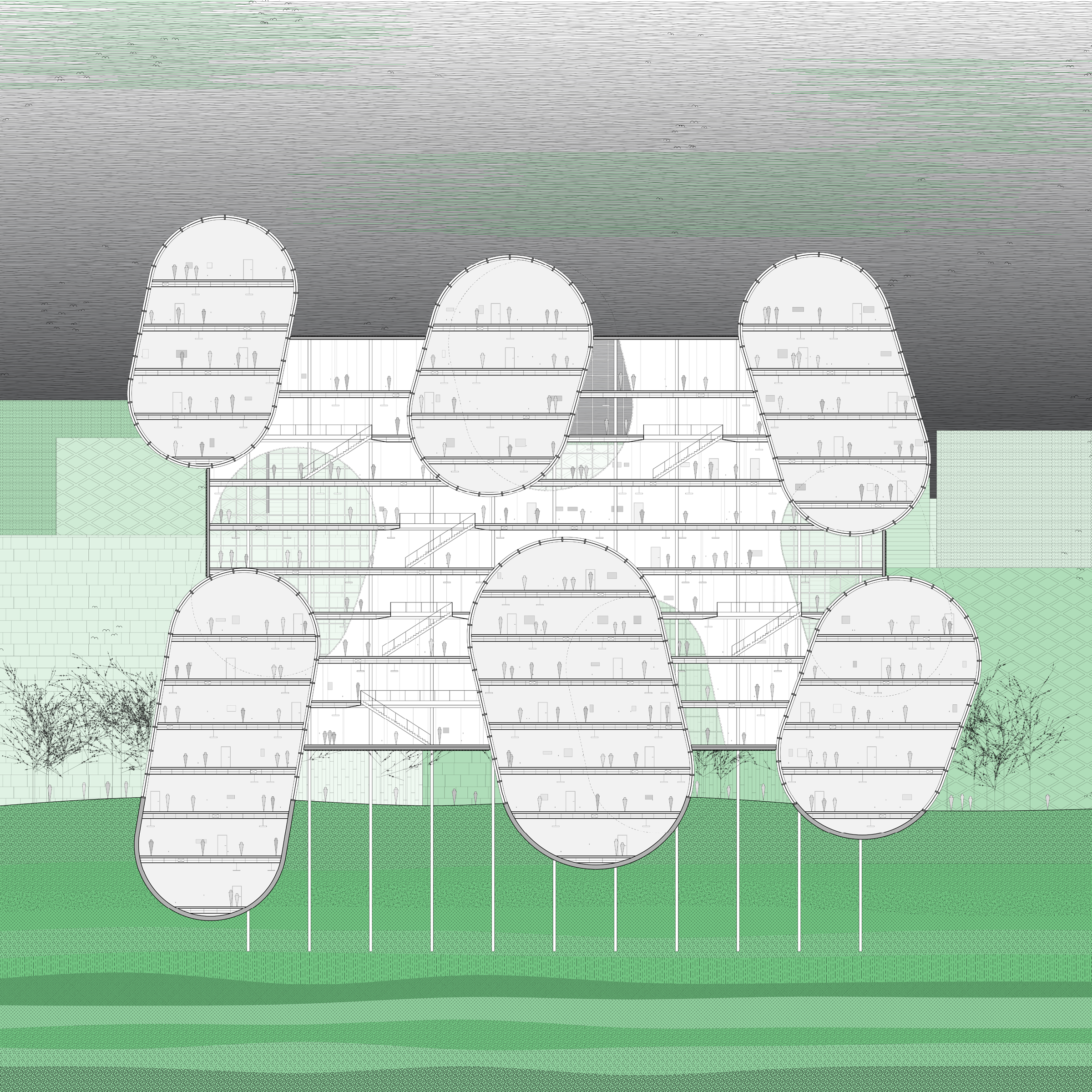
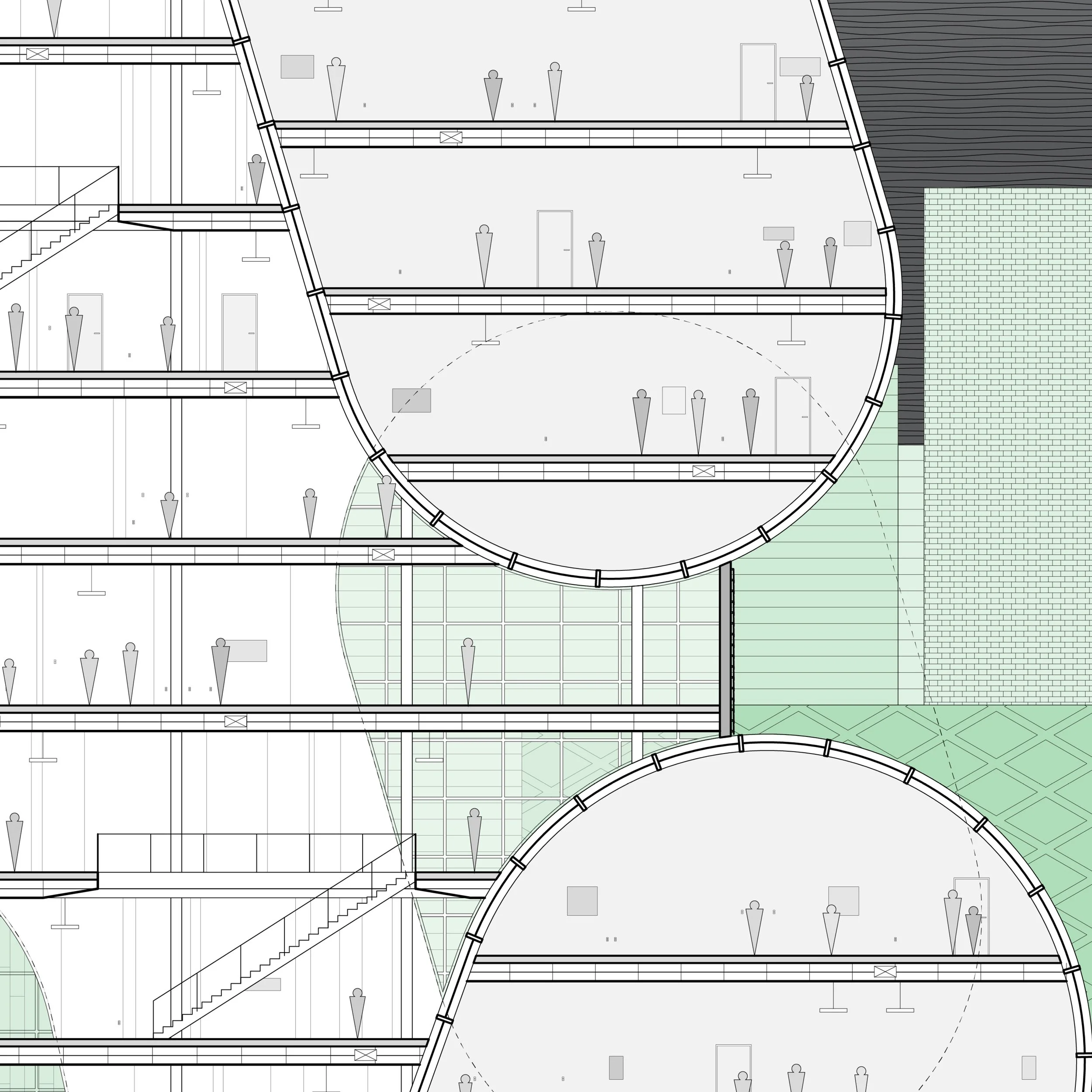
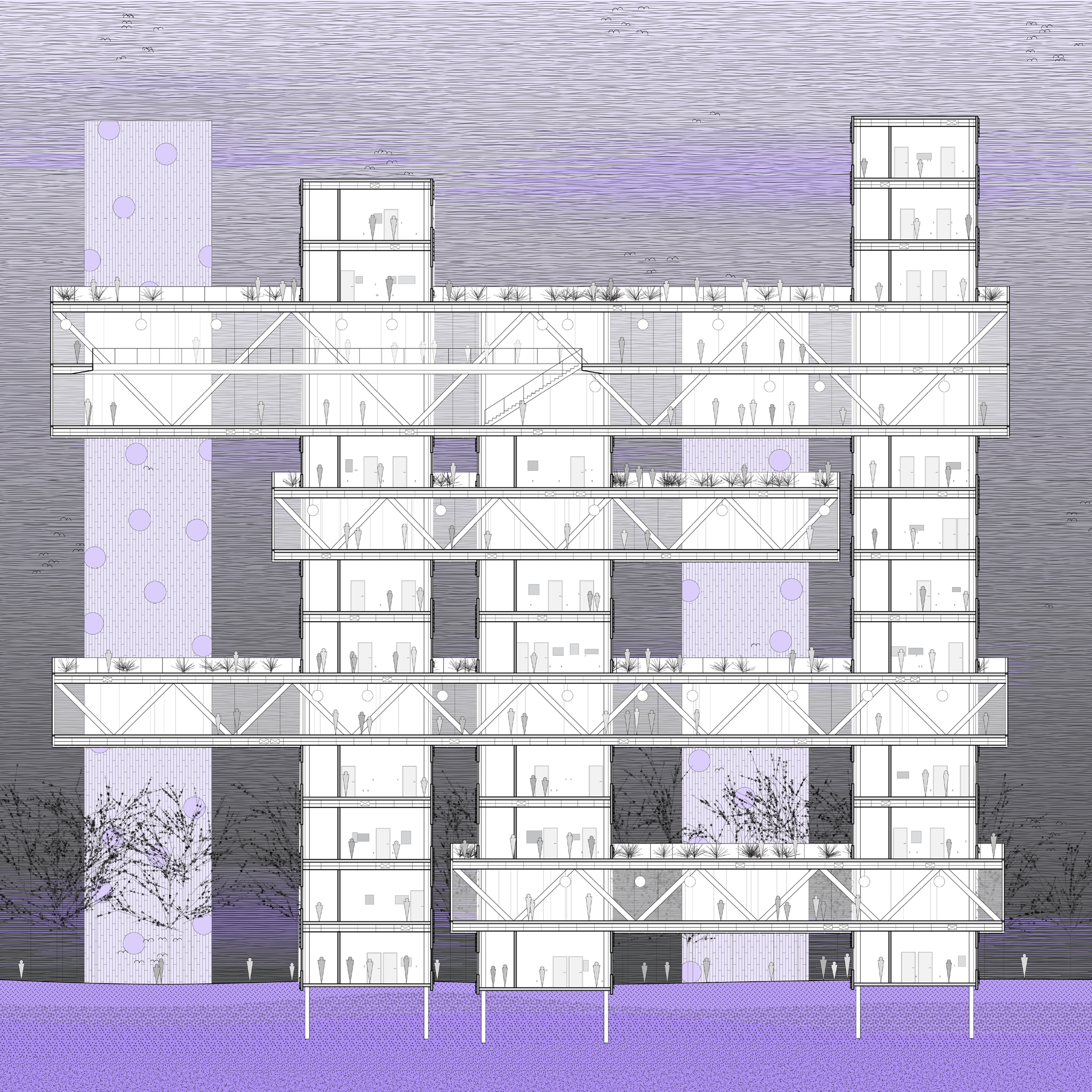
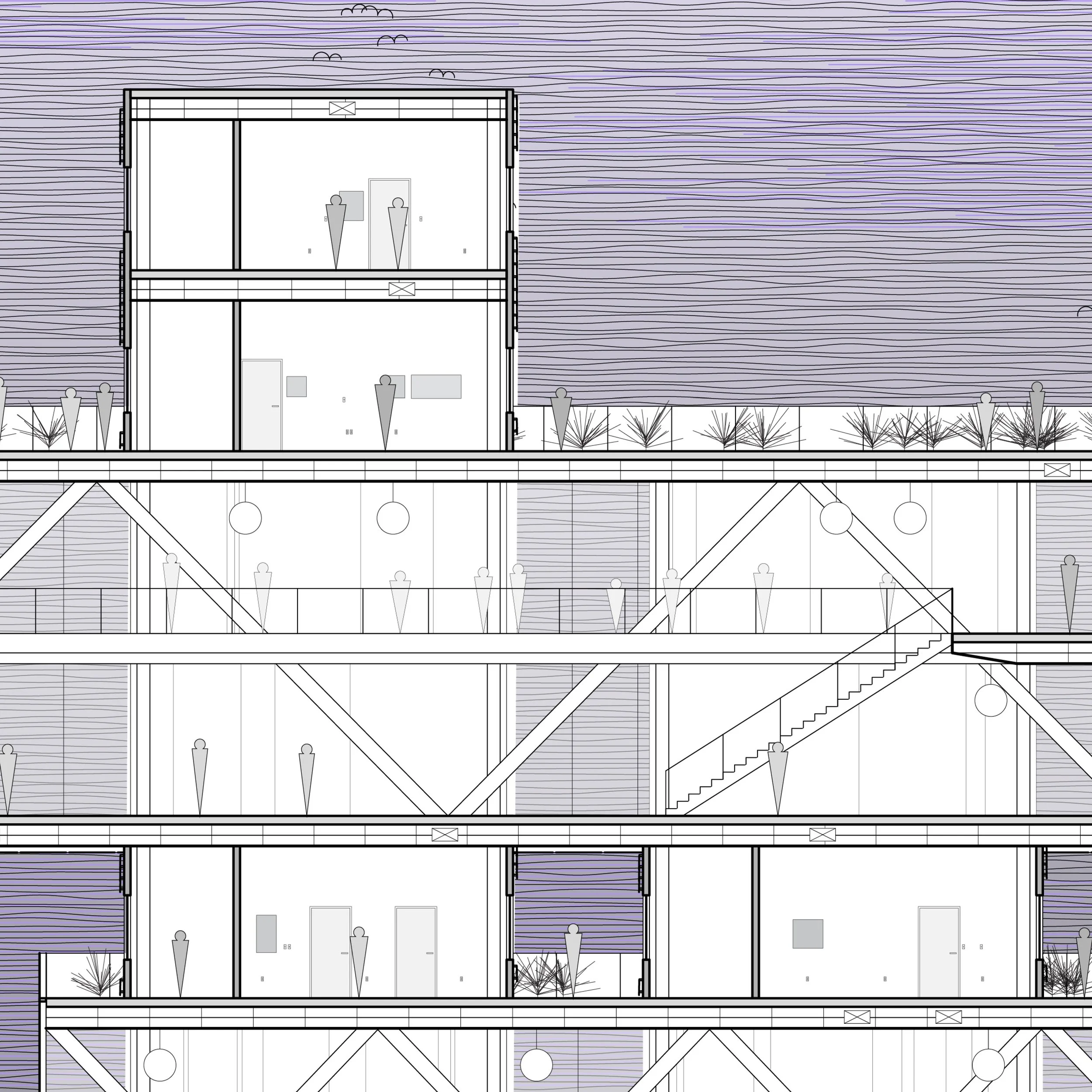
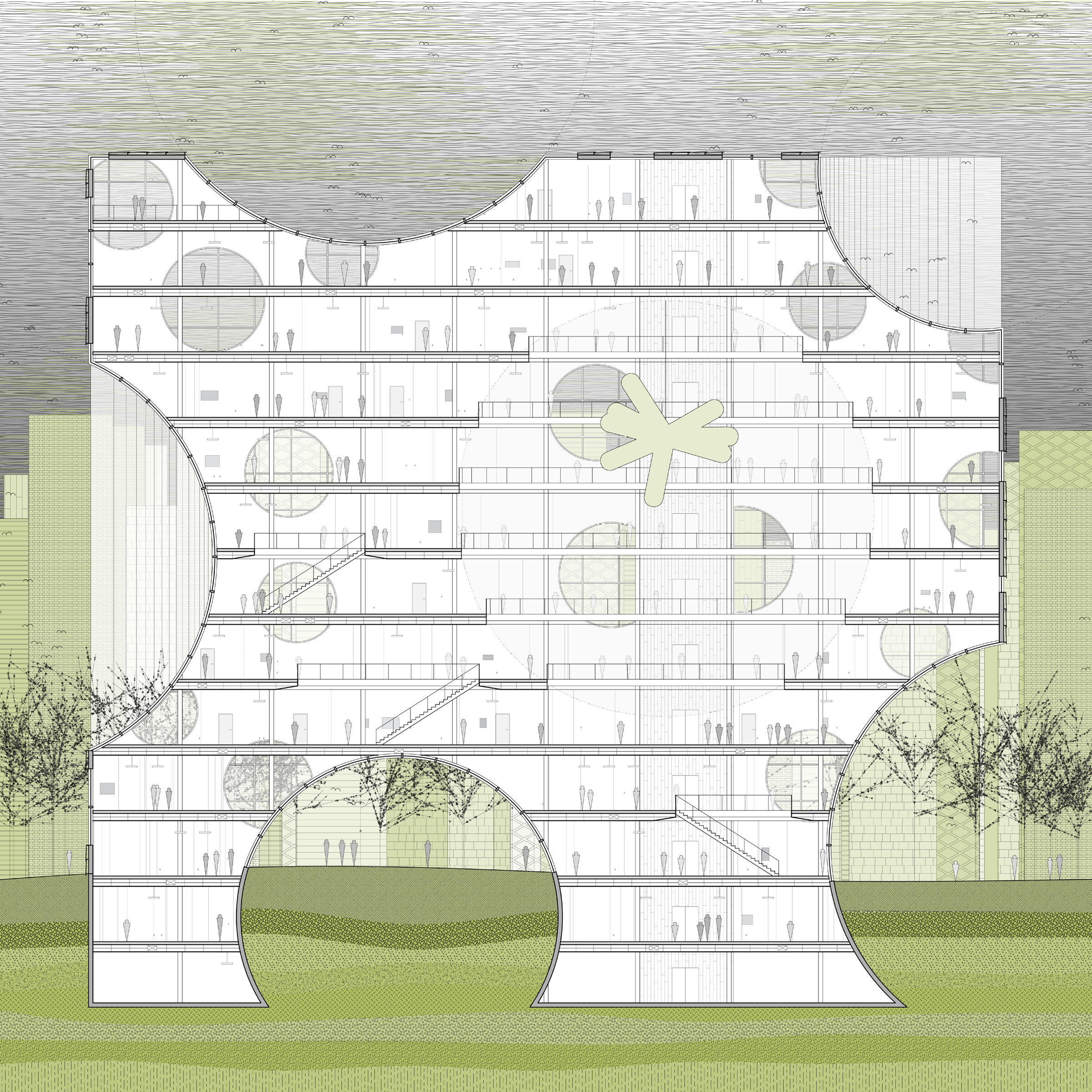
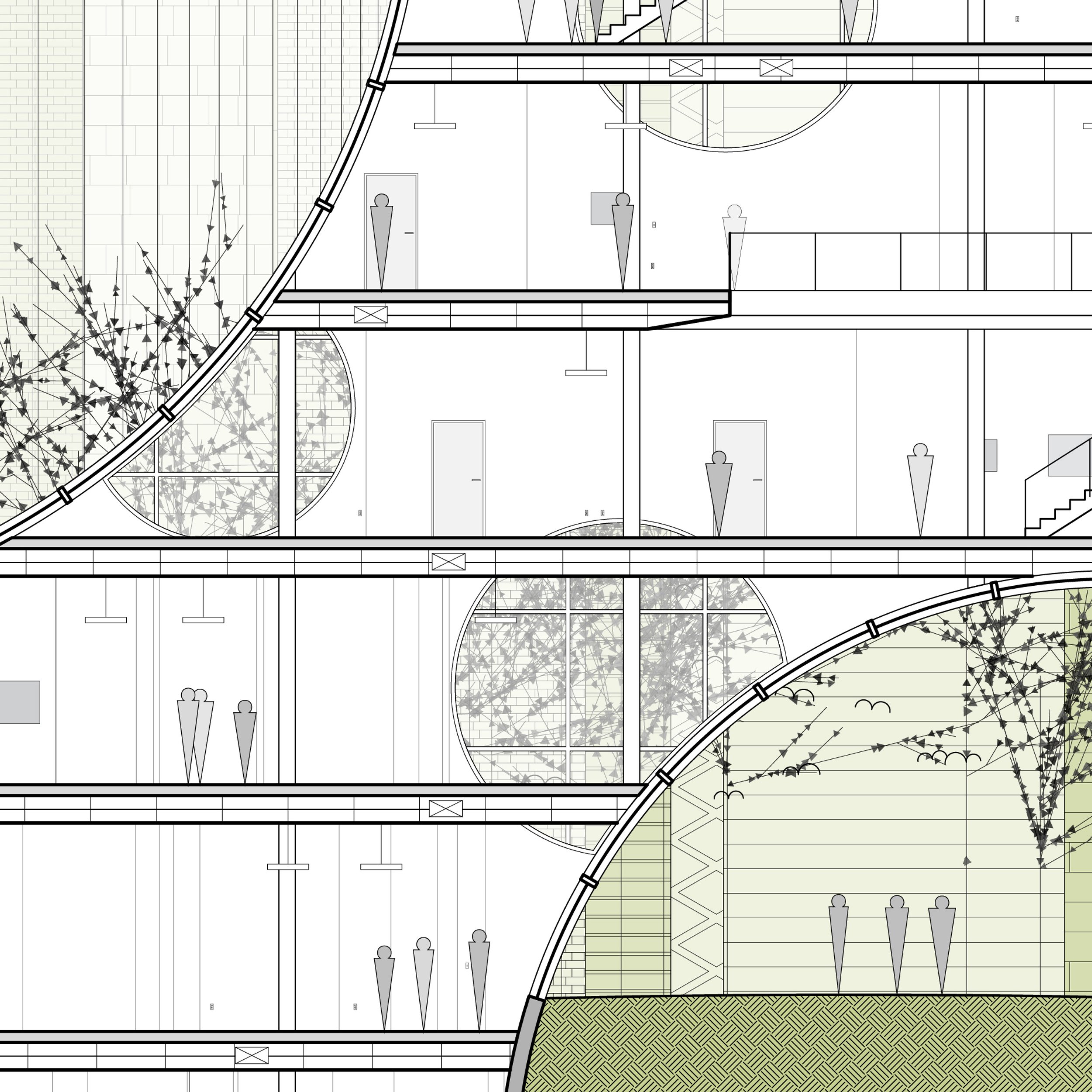
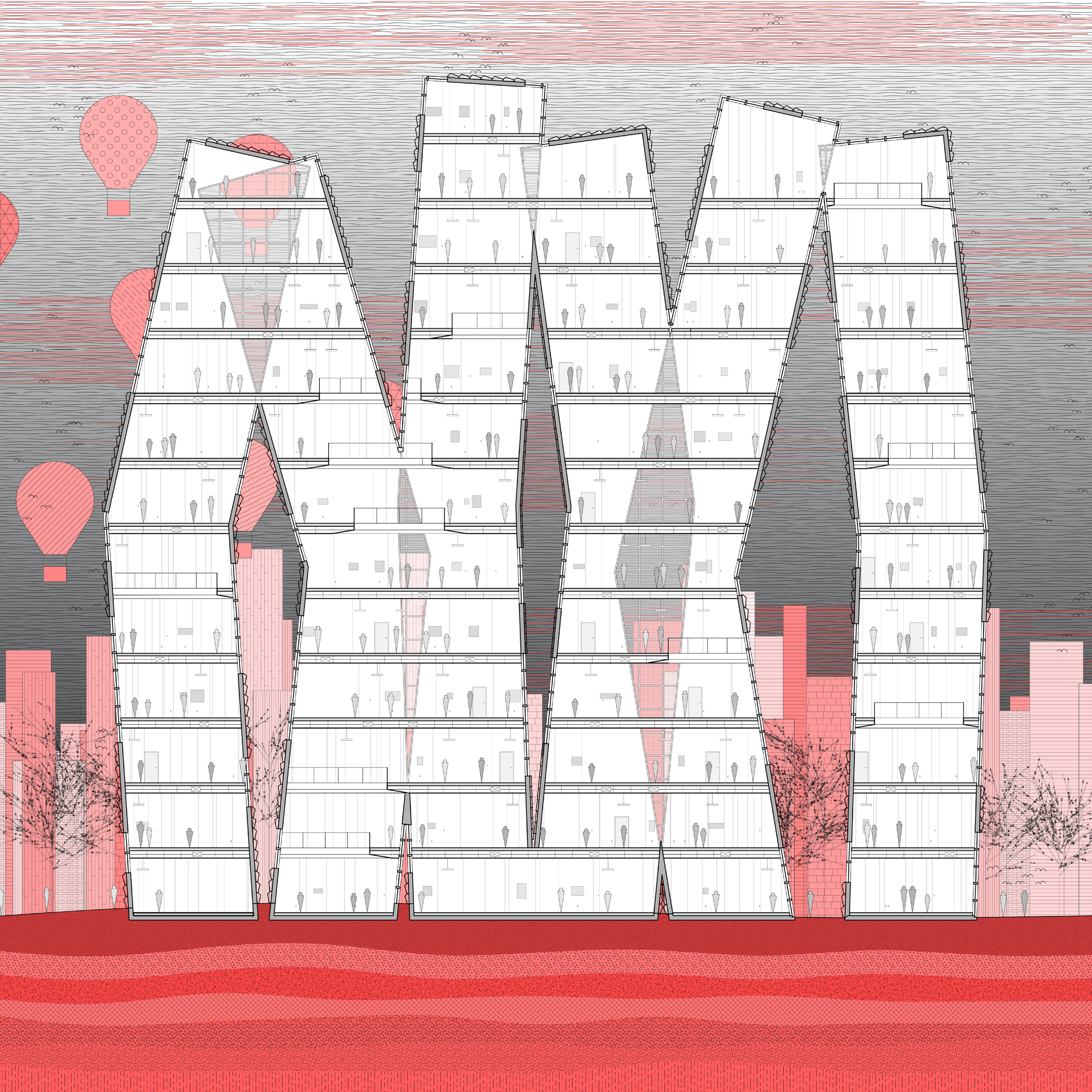
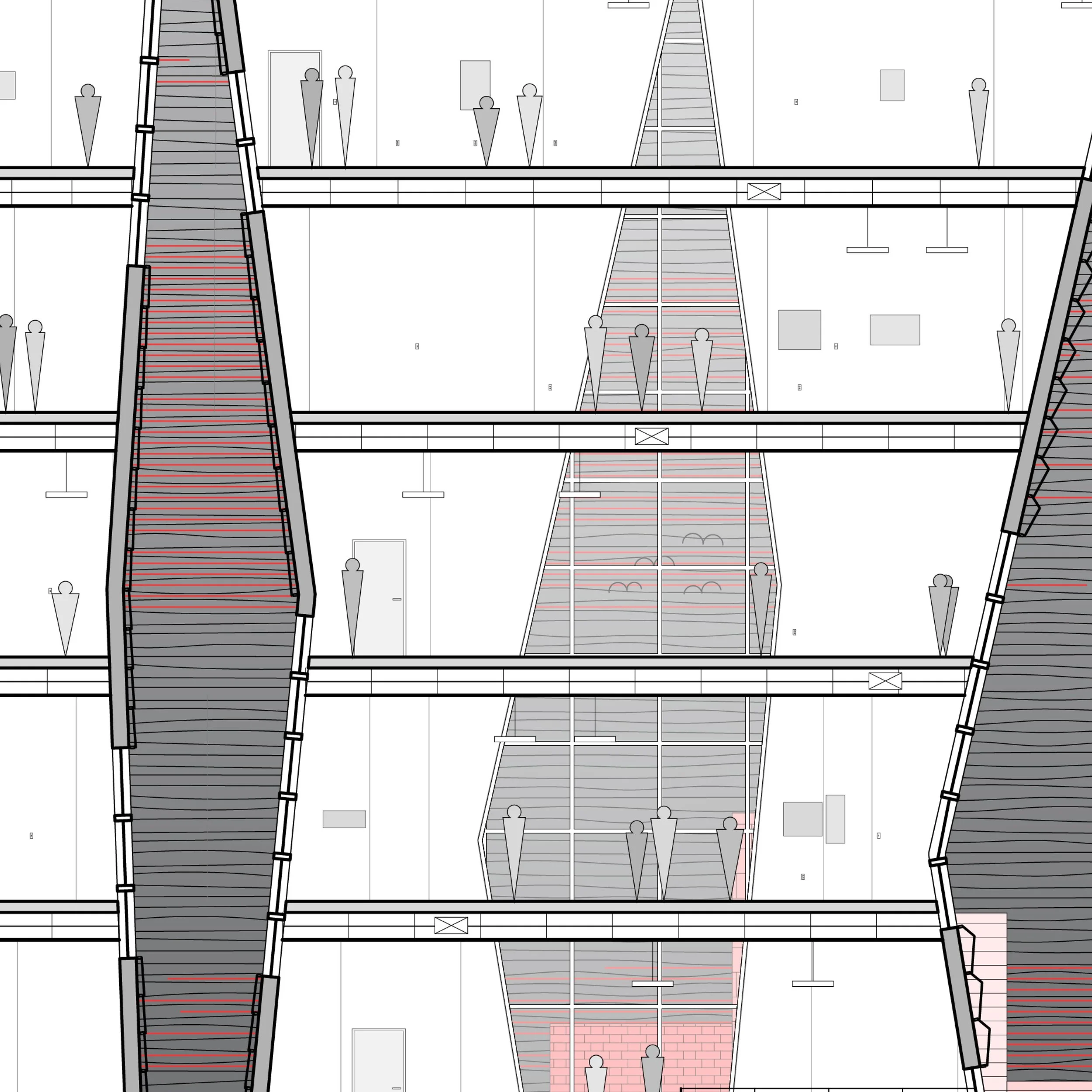
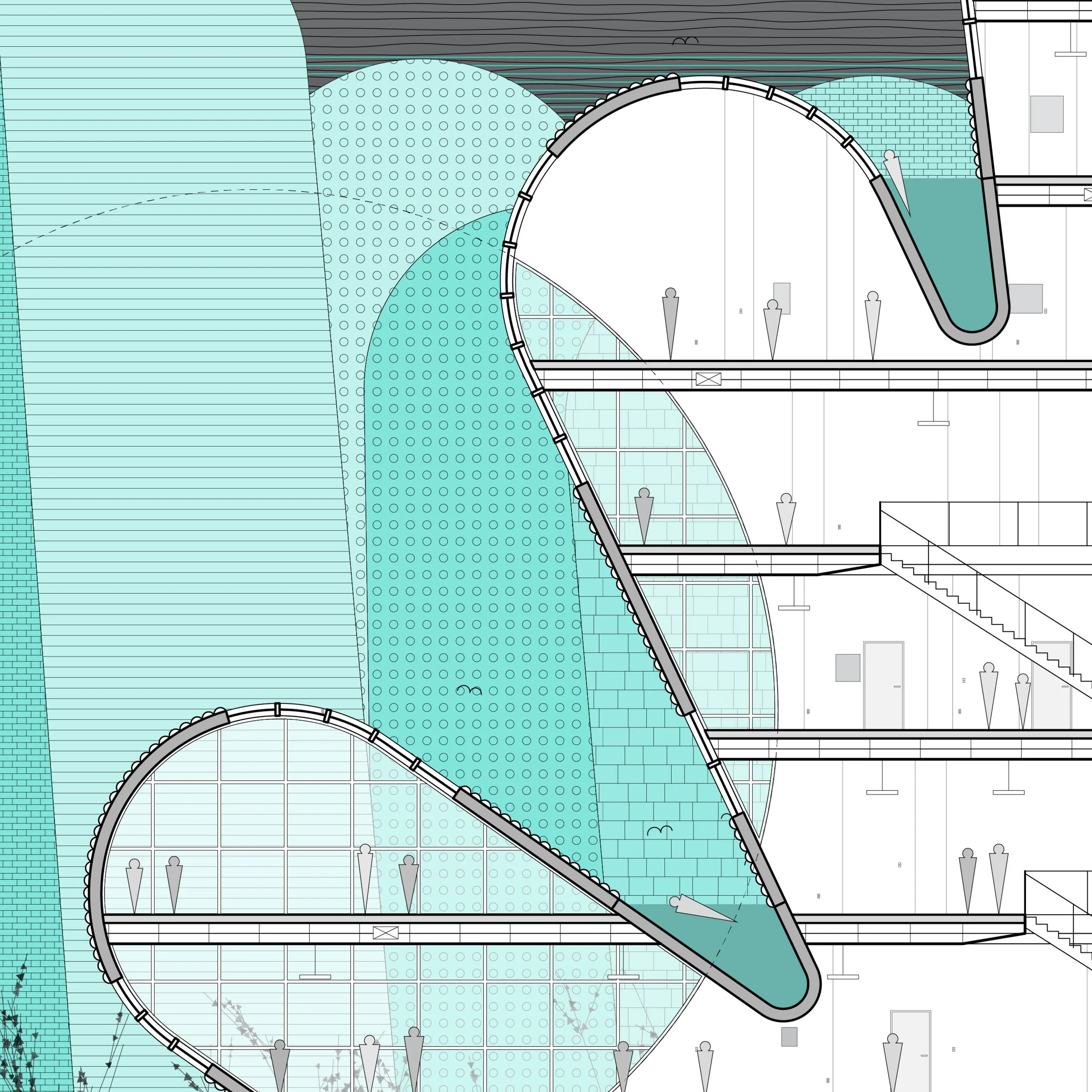
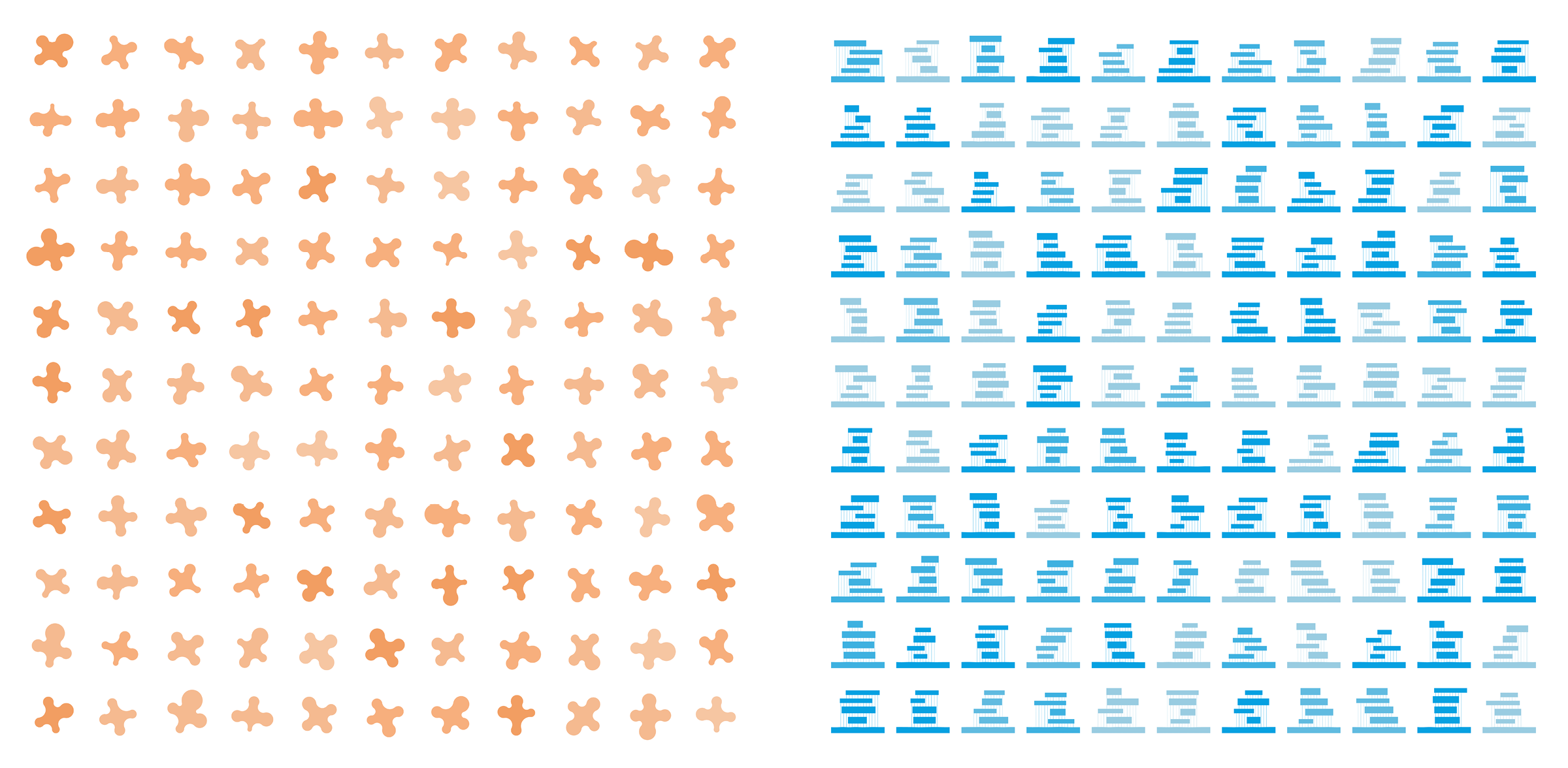
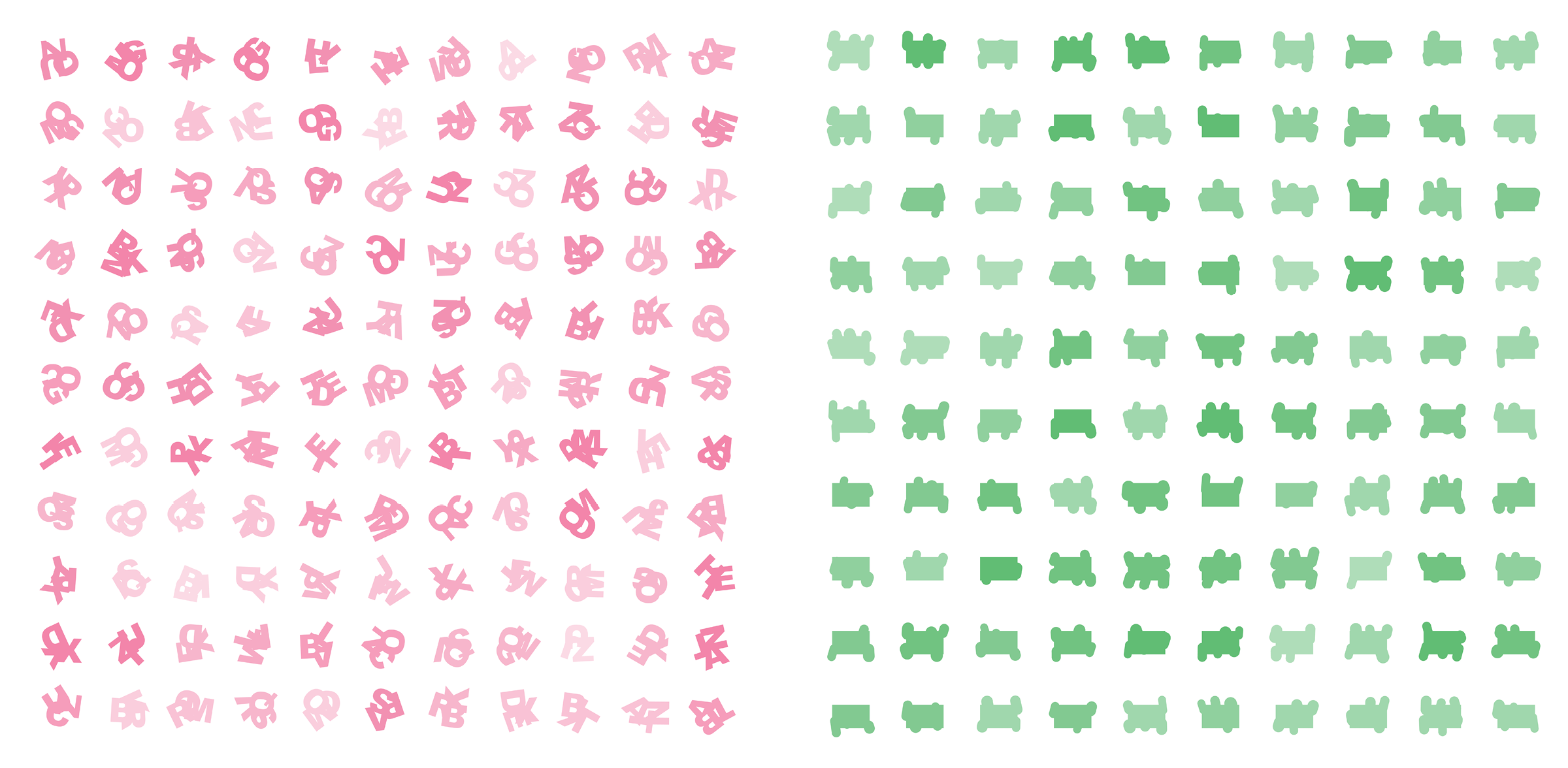
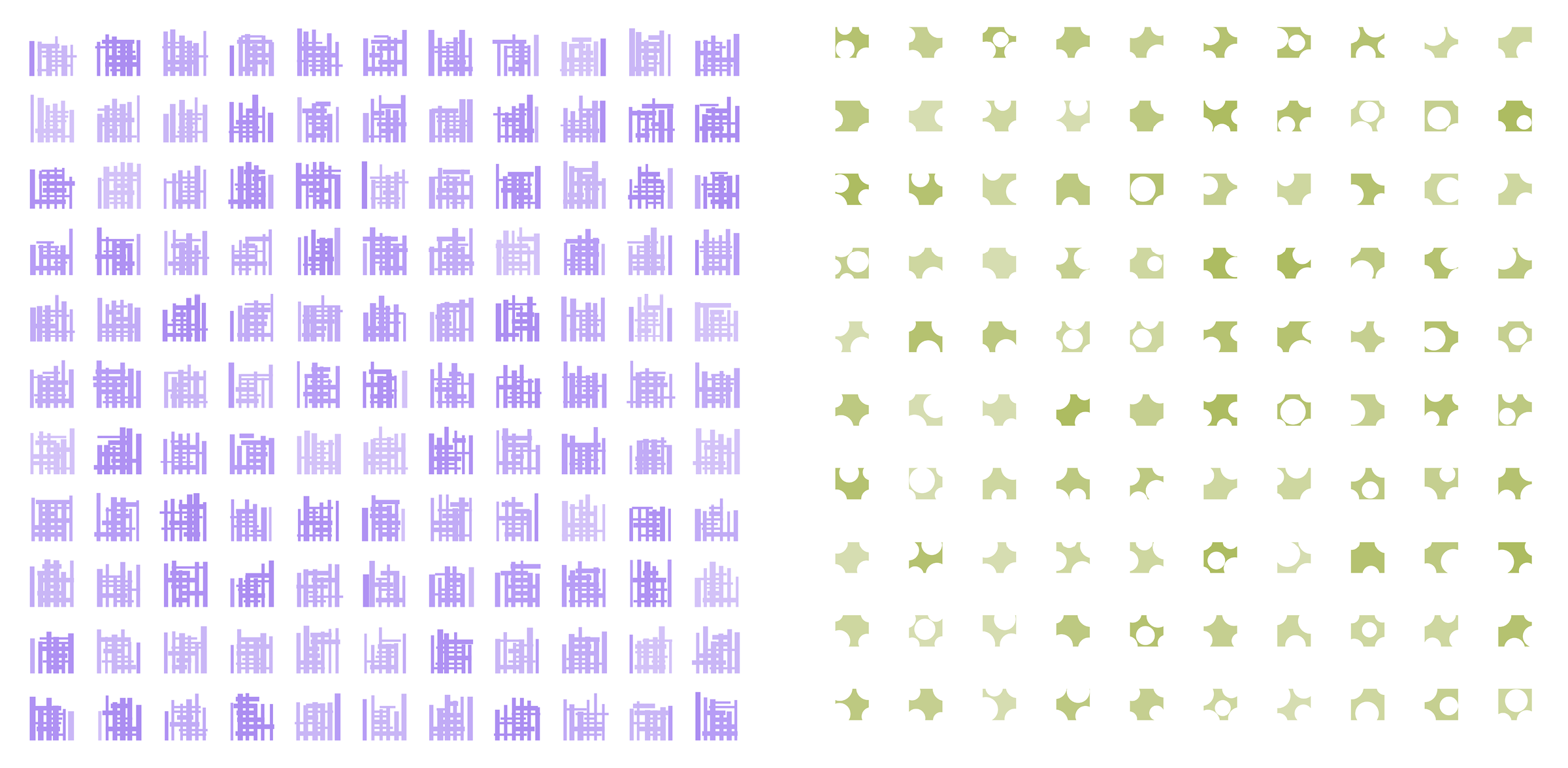
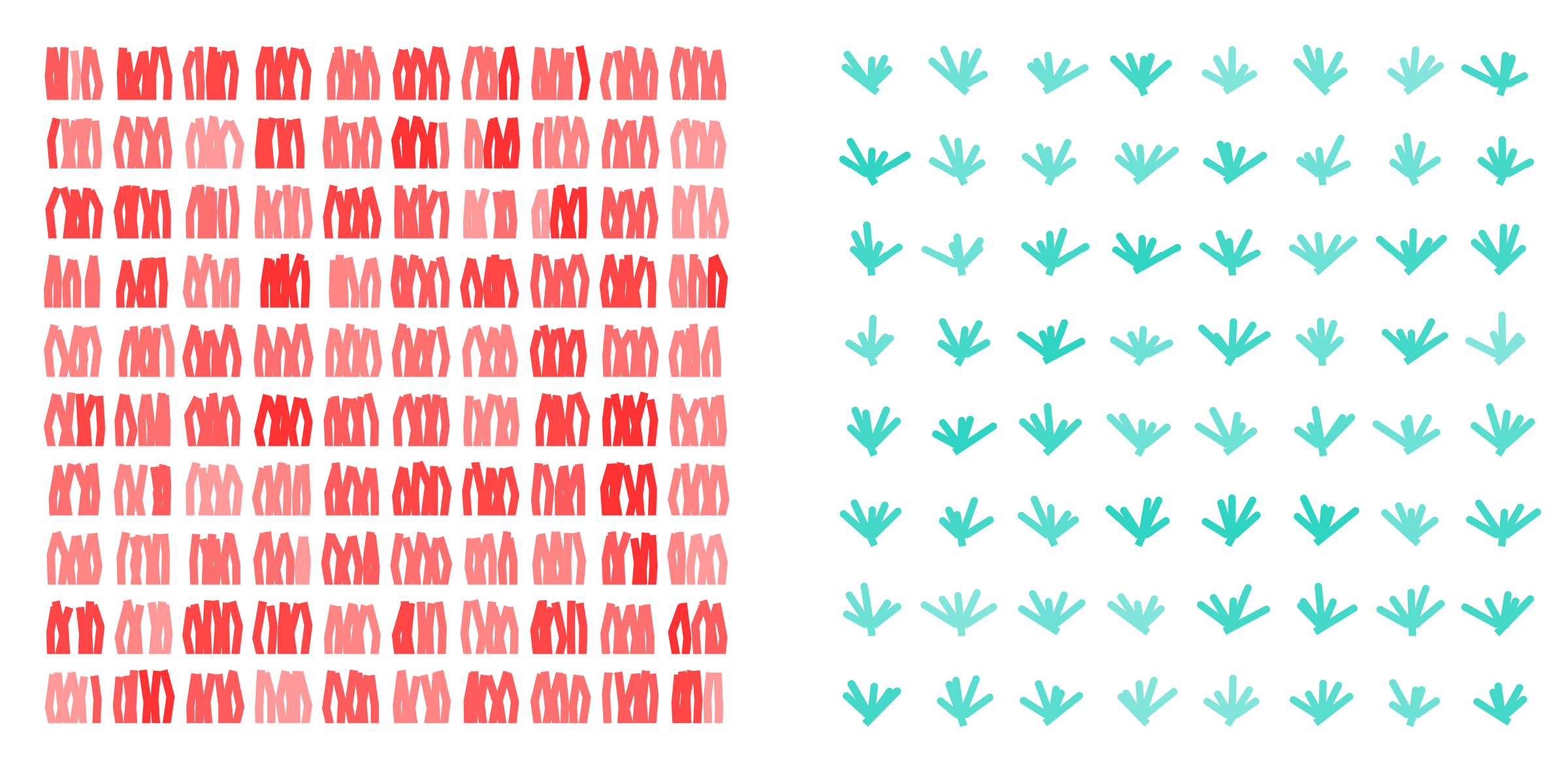
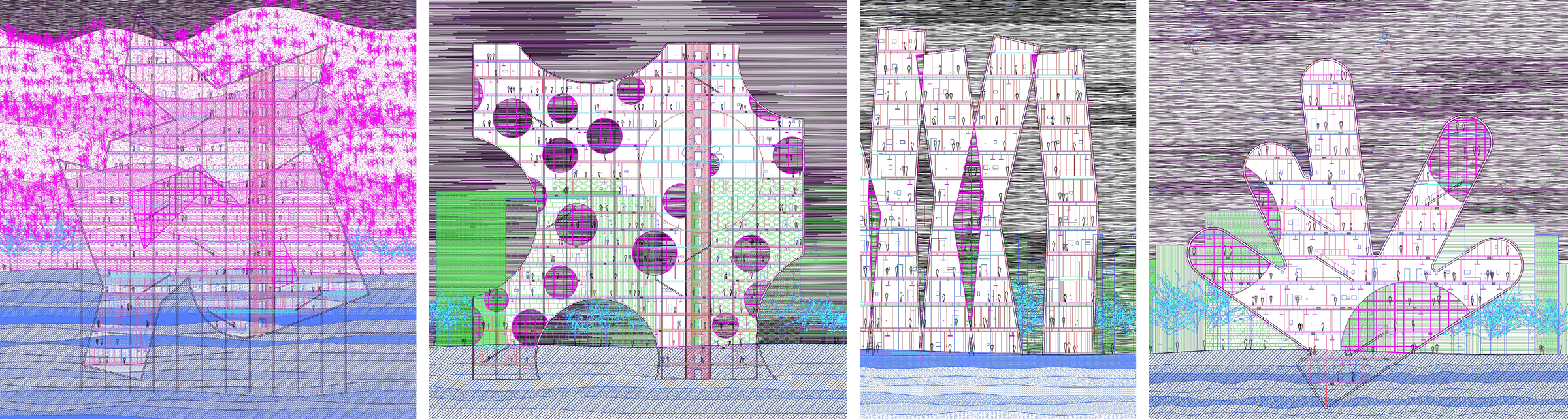
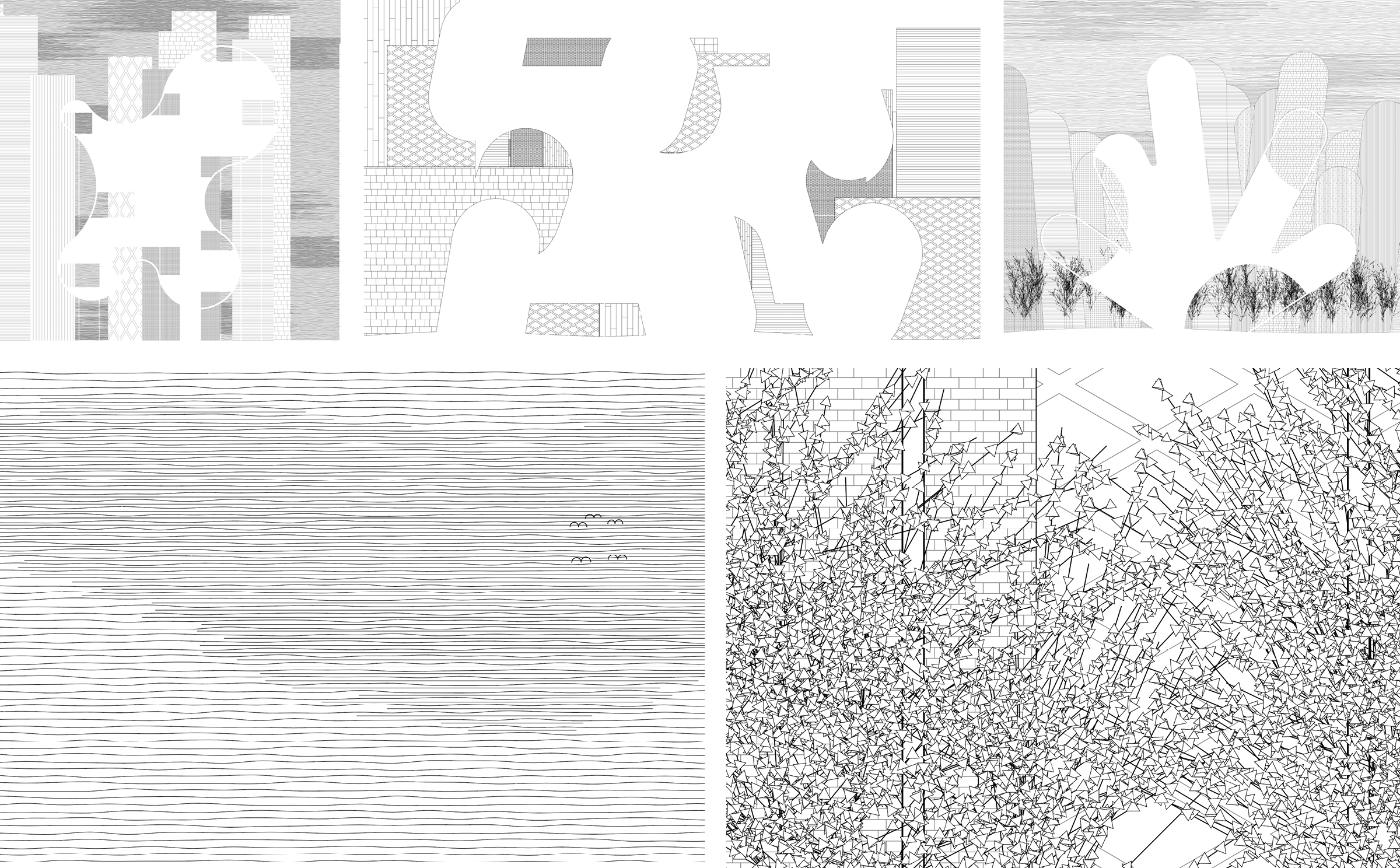
This series of drawings explores the possibilities of algorithmically generated architectural form in two dimensions, without the use of three-dimensional models. The work builds upon over a decade of experimentation with parametric and procedural drawings that use simple algorithms or rule sets to construct figural geometries. While some of these experiments focus on clear figure-ground relationships, others use layered linework to produce more ghostly field conditions. Here, these diagrams are translated to a series of speculative building sections, exploring figural form, articulation of interior and exterior spaces, interstitial spaces, and the production of novel modes of representation.
This research builds upon historical examples of figural sections, from Étienne-Louis Boullée and Charles-François Ribart to Kenzo Tange, Archigram, Paul Rudolph, and OMA. Although the work employs complex algorithms to iterate formal logics and representational techniques, it stubbornly insists on the generative capacity of two-dimensional drawing, and the persistent relevance of drawing even as computation increasingly defines our era.
These drawings were exhibited alongside Andrew Kudless’s procedural plans in the exhibition Hatchwork: An Archaeology of Generative Drawing, held at Penn State’s Stuckeman School in February–March, 2026.

Project Credits:
Adam Marcus